

Animal World > Wild Birds
The Ghost of the Reedbeds: Aquatic Warbler Facts & Identification
By SALAUDDIN KAWSAR ǀ Published on 02/13/2026

In the world of wild birds, there are common residents, and then there are the "holy grails." The Aquatic Warbler (Acrocephalus paludicola) falls firmly into the latter. As Europe’s rarest migratory songbird, it doesn't just visit the UK; it whispers through it.
Breeding in the vast, soggy fen mires of Eastern Europe and wintering in West Africa, this tiny traveler is a high-stakes migrant. For a few fleeting weeks in late summer, a tiny handful—perhaps only 40 or 50 birds—touch down in the coastal marshes of Southern England. Seeing one isn't just birdwatching; it’s witnessing a species on the brink.
How to Identify an Aquatic Warbler
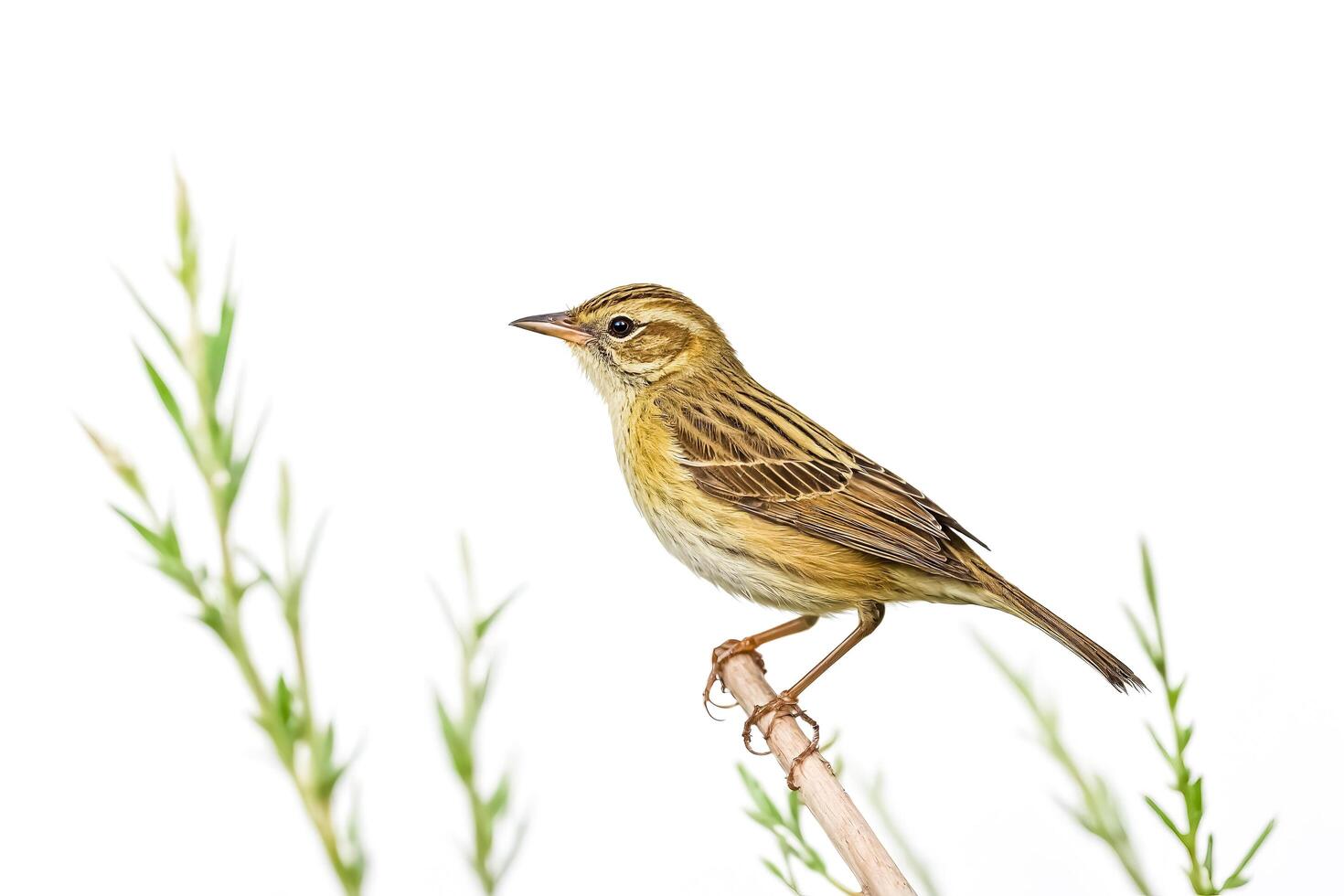
At first glance, you’d be forgiven for thinking you’ve spotted a common Sedge Warbler. They share the same nervous energy and love for thick vegetation. However, look closer—if the bird stays still long enough.
The Crown Stripe: This is your "smoking gun." Unlike the Sedge Warbler, the Aquatic Warbler has a very bold, pale-yellow stripe running right down the center of its dark crown. It looks almost like a tiny racing stripe.
Plumage: Its back is much more heavily streaked with black and buff, giving it a straw-colored, "pointy" appearance. It looks "yellower" and more contrasty than its cousins.
The Flanks: While Sedge Warblers have clean, creamy flanks, the Aquatic Warbler often shows fine, dark "pencil" streaks along its sides.
The Profile: It has a notably flattened forehead and a short, rounded tail, often seen creeping mouse-like through the base of the reeds rather than perching on top.
The Sound of Nature

In the UK, you are unlikely to hear its full breeding song—a hurried, chattering warble. Instead, listen for its flight call: a sharp, hard "tack" or a dry, clicking sound. It’s an understated noise, easily lost in the rustle of the wind through the Phragmites, but to a trained ear, it’s the sound of a global rarity hiding in plain sight.
Where and When to See Them
Timing is everything. You won't find an Aquatic Warbler in the UK during the spring. They are strictly autumn passage migrants.
When: The window is narrow—August is the peak month. By September, most have already departed for the Sahel region of Africa.
Where: They are specialists of the south coast. Look for them in coastal reedbeds, particularly where the vegetation is slightly lower or managed.
| Month | Likelihood | Behavior |
| Jan - July | Zero | Absent from the UK (Breeding in Poland/Belarus). |
| August | High (Rare) | Stopping over to "refuel" on insects before the Sahara crossing. |
| September | Low | Late stragglers may linger in the southwest. |
| Oct - Dec | Zero | Wintering in West Africa (Senegal/Mali). |
Key Facts: The Aquatic Warbler at a Glance
| Feature | Detail |
| Conservation Status | Vulnerable (IUCN Red List) |
| Diet | Insects, spiders, and small aquatic larvae |
| Global Population | ~10,000 - 20,000 singing males |
| Length | 13cm |
| Weight | 10g - 14g |
| Wingspan | 16.5cm - 19.5cm |
The Expert Tip: Days Out
If you want to add this bird to your life list, pack your binoculars and head to these specific coastal strongholds in August:
Marazion Marsh, Cornwall: This RSPB reserve is arguably the most reliable spot in the UK. The "leeward" side of the reedbeds often holds one or two birds during southwesterly winds.
Radipole Lake & Lodmoor, Dorset: These sister reserves in Weymouth offer fantastic boardwalk access. Watch the muddy edges of the reedbeds where the birds come out to feed on insects.
Farlington Marshes, Hampshire: A great "trap" for migrants. Focus on the areas where the saltmarsh meets the reed-fringed ditches.
A Note from the Field: The first time I saw one at Lodmoor, I almost missed it. It didn't fly; it simply "crawled" through the reed stems like a large insect. Patience is your best tool—find a quiet corner of the marsh and let the birds come to you.

No comments:
Post a Comment