

Garden > Pests & Care
Why Your Plant Has Holes in Its Leaves: 5 Smart Ways to Stop Damage Fast
By SALAUDDIN KAWSAR ǀ Published on 06/25/2026
Introduction
You walk into your garden one morning expecting to see healthy, thriving plants, only to discover mysterious holes scattered across the leaves. It can be frustrating, especially when your plants appeared perfectly healthy just days before. Whether you're growing vegetables, flowers, herbs, or ornamental plants, damaged foliage is often one of the earliest warning signs that something is wrong.
The good news is that holes in leaves are usually not random. In most cases, the damage is caused by a specific culprit that can be identified and controlled. Caterpillars, slugs, chewing insects, wildlife, and fungal diseases are among the most common causes of holes in outdoor plant leaves. Once you understand what's creating the damage, you can take action quickly and prevent further harm.
Many gardeners make the mistake of treating every hole the same way. However, effective plant care begins with accurate diagnosis. The shape of the holes, the timing of the damage, and even the location of the affected leaves can reveal important clues.
In this guide, you'll learn how to identify the source of leaf damage and discover five smart, proven methods to protect your plants while preserving beneficial insects and maintaining a healthy garden ecosystem.
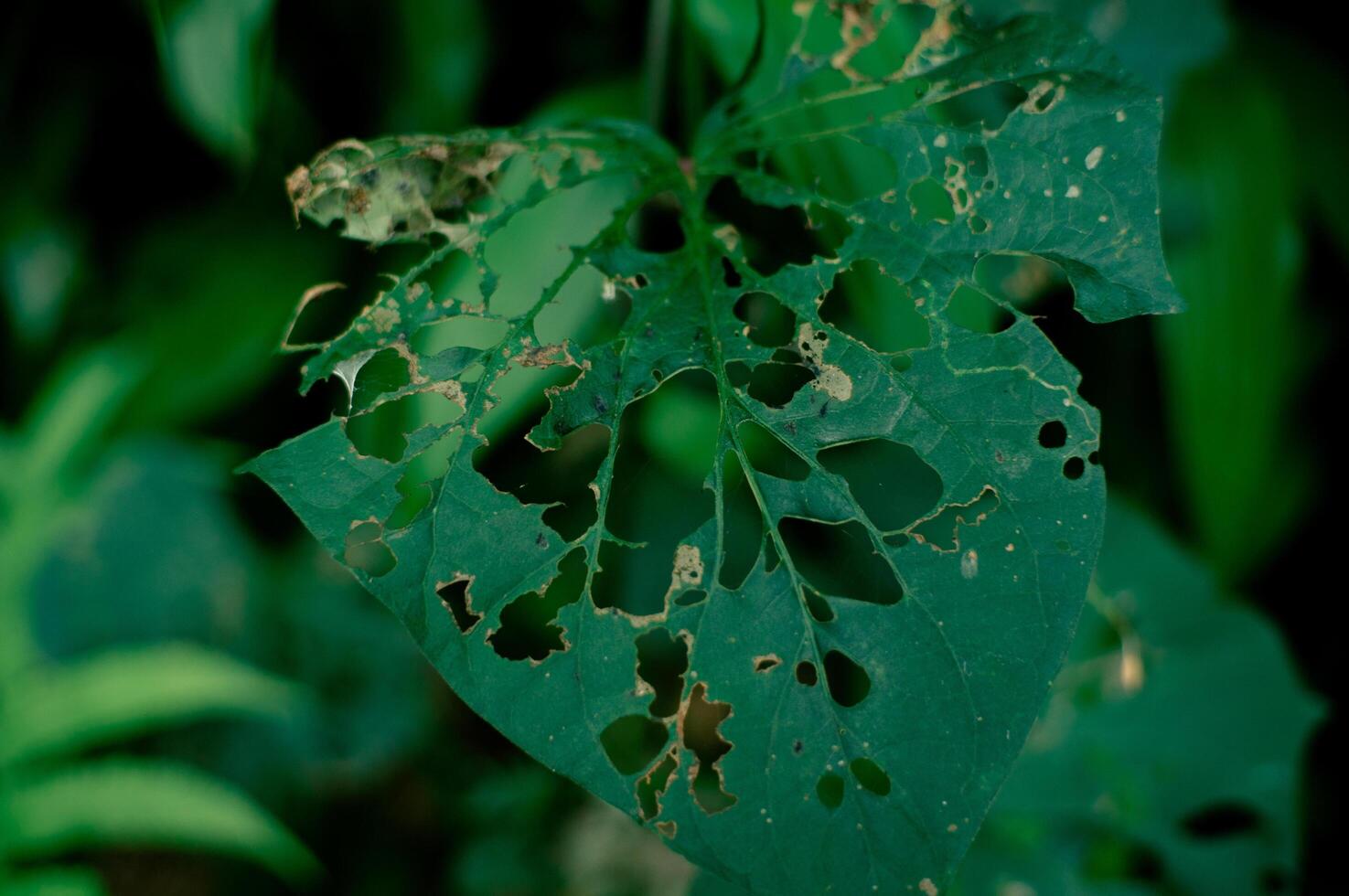 |
| Close-up of outdoor plant leaves showing holes caused by common garden pests. |
In This Article
- Why Plants Develop Holes in Their Leaves
- Holes Caused By Caterpillars
- Holes Caused By Slugs
- Holes Caused By Chewing Insects
- Holes Caused By Wildlife
- Holes Caused By Fungal Diseases
- 5 Smart Ways to Stop Leaf Damage Fast
- How to Prevent Future Leaf Damage
Why Plants Develop Holes in Their Leaves
When gardeners notice holes in leaves, the first assumption is often insect damage. While insects are responsible for many cases, they are not the only explanation. Leaf damage can result from feeding pests, fungal infections, environmental stress, or even larger animals visiting your garden. The pattern of damage is one of the most important clues. Some pests leave perfectly round holes, while others create ragged leaf edges. Certain fungal diseases cause dead spots that eventually fall out, creating a "shot-hole" appearance. Wildlife often leaves behind missing leaves or torn foliage rather than neat holes. Understanding these differences can save valuable time and prevent unnecessary treatments. Instead of spraying pesticides immediately, successful gardeners carefully inspect affected plants, check the undersides of leaves, and look for signs such as slime trails, droppings, fungal spots, or animal tracks. Accurate identification not only solves the problem faster but also helps protect beneficial insects such as ladybugs, lacewings, and pollinators that contribute to a healthy garden environment.
Different types of leaf holes can reveal the cause of plant damage.
Holes Caused By Caterpillars
Caterpillars are among the most common causes of leaf damage in outdoor gardens. These hungry larvae can consume large amounts of foliage in a surprisingly short period. Their feeding often results in irregular holes and ragged leaf edges, especially on vegetables, flowering plants, and fruit trees.How to Identify Caterpillar Damage
Caterpillar feeding usually begins near leaf edges before progressing inward. You may also notice small black droppings, known as frass, beneath the affected plant. In severe infestations, entire leaves can disappear. Some species feed openly during the day, while others hide underneath leaves or in nearby mulch. Because they blend well with foliage, they can be difficult to spot at first glance.How to Control Holes Caused By Caterpillars
Hand removal remains one of the most effective methods for small infestations. Inspect plants early in the morning or evening when caterpillars are most active. For larger outbreaks, organic biological controls can help reduce populations without harming beneficial insects. Garden netting is another excellent solution, particularly for vegetables. By preventing adult moths and butterflies from laying eggs on plants, you can stop future infestations before they begin.Caterpillar feeding damage creating irregular holes and ragged leaf edges.
Holes Caused By Slugs
Slugs are notorious nighttime feeders that thrive in cool, damp environments. They often attack young plants and tender leaves, leaving behind large irregular holes and distinctive slime trails.Recognizing Slug Damage
Unlike many insects, slugs feed on both leaf surfaces and edges. Their damage often appears overnight, making healthy plants look severely damaged by morning. The presence of silvery slime trails is one of the clearest signs that slugs are responsible. These trails may be visible on leaves, soil, pots, and nearby structures.How to Control Holes Caused By Slugs
Reducing moisture around plants can significantly decrease slug activity. Watering early in the day allows soil surfaces to dry before evening, making conditions less attractive. Physical barriers, traps, and hand removal are also effective. Many gardeners successfully protect vulnerable plants by creating environments that discourage slug movement and shelter.Slug damage on garden plants showing irregular holes and feeding scars.
Holes Caused By Chewing Insects
Beyond caterpillars, many other insects create holes in plant leaves. Beetles, grasshoppers, earwigs, and various larvae can all contribute to foliage damage.Signs of Chewing Insect Activity
Chewing insects often leave distinctive patterns depending on the species involved. Some create small, round holes throughout the leaf surface, while others skeletonize leaves by consuming tissue between veins. Missing leaves and widespread feeding damage across multiple plants may indicate a larger insect population in the garden.How to Control Holes Caused By Chewing Insects
Regular plant inspections are essential for early detection. Natural predators such as birds, lacewings, and beneficial beetles help maintain balance in the garden. Organic sprays can provide additional protection when necessary. However, treatments should always be targeted to avoid harming pollinators and beneficial species.
Chewing insect damage creating holes across multiple plant leaves.
Holes Caused By Wildlife
Not all leaf damage originates from insects. Rabbits, deer, squirrels, and other wildlife frequently feed on garden plants, especially when natural food sources become scarce.How Wildlife Damage Differs
Wildlife feeding often results in missing leaves, torn stems, and partially eaten plants. Unlike insect damage, larger animals usually remove entire sections of foliage rather than creating small holes. Patterns of destruction may also appear suddenly and affect multiple plants at once.How to Control Holes Caused By Wildlife
Protective netting and fencing remain among the most effective solutions. Physical barriers prevent access while allowing sunlight, air circulation, and pollinator activity. Gardeners can also select wildlife-resistant plants and create habitat zones away from valuable garden beds to reduce browsing pressure.Wildlife feeding damage causing missing leaves and torn plant foliage.
Holes Caused By Fungal Diseases
Fungal diseases are often overlooked because the resulting holes resemble insect damage. In reality, certain fungal infections create dead spots that dry out and eventually fall away.Recognizing Fungal Leaf Holes
The process typically begins with small brown, black, or yellow spots. As infected tissue dies, the center drops out, leaving circular holes behind. This condition is commonly known as the "shot-hole effect" because affected leaves appear as though they have been punctured.How to Control Holes Caused By Fungal Diseases
Improving airflow around plants is one of the best preventive measures. Proper spacing reduces humidity and helps foliage dry more quickly after rain or watering. Removing infected leaves and avoiding overhead watering can significantly reduce disease spread. Early intervention is critical because fungal pathogens often multiply rapidly under favorable conditions.Fungal leaf spot disease creating characteristic shot-hole damage.
5 Smart Ways to Stop Leaf Damage Fast
The most effective approach to protecting plants involves combining several strategies rather than relying on a single solution. First, identify the culprit before taking action. Misdiagnosis often leads to ineffective treatments and unnecessary expenses. Second, inspect plants regularly. Early detection dramatically improves success rates and limits long-term damage. Third, use natural barriers such as netting, row covers, and protective fencing. These solutions prevent many problems before they begin. Fourth, encourage beneficial insects and natural predators. Healthy ecosystems naturally suppress many common pests. Finally, maintain proper garden hygiene. Removing diseased leaves, weeds, and debris eliminates hiding places for pests and reduces disease pressure.Healthy garden protected through early detection and natural pest control methods.
How to Prevent Future Leaf Damage
Preventing holes in leaves is often easier than treating established problems. Healthy plants naturally resist many pests and diseases more effectively than stressed specimens. Consistent watering, balanced fertilization, and proper spacing create conditions that support vigorous growth. Strong plants can recover from minor damage more quickly and are less attractive to opportunistic pests. Monitoring your garden weekly allows you to spot warning signs before significant damage occurs. Checking both upper and lower leaf surfaces can reveal hidden pests and developing diseases. Most importantly, remember that not every hole requires immediate intervention. Small amounts of damage are normal in outdoor gardens and often indicate a thriving ecosystem where beneficial insects coexist alongside occasional pests. By understanding the source of leaf damage and responding appropriately, gardeners can protect their plants while supporting long-term garden health.Healthy outdoor garden thriving with balanced pest management practices.
FAQs
Why does my plant suddenly have holes in its leaves?
Sudden holes are usually caused by caterpillars, slugs, chewing insects, wildlife, or fungal diseases. Identifying the pattern of damage helps determine the exact cause.
Are holes in leaves always caused by insects?
No. Wildlife feeding and fungal diseases can also create holes that resemble insect damage.
How do I know if slugs are eating my plants?
Look for irregular holes and shiny slime trails on leaves, soil, and nearby surfaces.
Can plants recover from leaf damage?
Yes. Most healthy plants recover well once the source of damage is identified and controlled.
Should I remove damaged leaves?
Removing severely damaged or diseased leaves can improve plant health and reduce the spread of pests and pathogens.
Pros & Cons
Pros
- Early diagnosis prevents extensive plant damage
- Natural control methods protect beneficial insects
- Improved garden health and productivity
- Reduced reliance on chemical pesticides
- Better long-term pest management
Cons
- Some pests are difficult to identify
- Repeated monitoring is necessary
- Natural treatments may take longer to show results
- Severe infestations may require multiple control methods
Conclusion
Finding holes in your plant leaves can be alarming, but it's rarely a mystery without a solution. Whether the culprit is caterpillars, slugs, chewing insects, wildlife, or fungal diseases, the key is recognizing the signs early and responding with targeted action.
The most successful gardeners don't simply treat symptoms—they investigate the cause. By understanding what is creating the damage, you can choose the right solution, prevent future outbreaks, and maintain a thriving garden filled with healthy plants.
Remember, every hole tells a story. The sooner you learn to read those clues, the better equipped you'll be to protect your garden naturally and sustainably.
Have you noticed holes in your plant leaves recently? Start inspecting your garden today, identify the culprit, and take action before minor damage becomes a major problem.
Internal & External Linking Suggestions
Internal Links
- Why Are My Plant Leaves Turning Yellow?
- How to Get Rid of Aphids Naturally
- Common Houseplant Problems and Solutions
- Best Organic Pest Control Methods for Gardens
- Signs Your Plant Is Overwatered
External Links
- Royal Horticultural Society Pest Guide
- University Extension Plant Disease Resources
- USDA Gardening Resources
- Botanical Garden Plant Care Guides
- Integrated Pest Management Information Center

No comments:
Post a Comment