

10 Common Houseplant Problems and Solutions (Save Your Indoor Jungle Today!)
Comparison of a dying houseplant with yellow leaves and a healthy green Monstera in a modern indoor pot

Why Your Plant is Struggling (And How to Fix It Fast)
Let’s be honest: we have all been there. You bring home a beautiful, glossy peace lily or a trendy fiddle leaf fig, convinced you have finally found your green thumb. Then, three weeks later, you are staring at drooping leaves, mysterious brown spots, or tiny flies buzzing around the soil. Don’t throw in the trowel just yet.
The truth is, common houseplant problems are rarely a death sentence. Most issues stem from just five core mistakes: incorrect watering, poor light, humidity shock, soil exhaustion, or hidden pests. In this guide, we will walk through every yellow leaf, mushy stem, and stubborn bug you might encounter. By the end, you will not only diagnose the issue but also know exactly how to bring your indoor jungle back to life—using simple, organic, and wallet-friendly solutions.
Overwatering vs. Underwatering: The Ultimate Confusion
The number one killer of houseplants is kindness—specifically, too much water. Conversely, neglect (underwatering) is a close second. Here is how to tell the difference like a pro.
Signs of Overwatering: Leaves turn soft, mushy, and yellow (often starting at the bottom).The soil smells like rotten eggs or swamp mud.You see fungus gnats (tiny black flies) hovering around the pot.
Signs of Underwatering: Leaves become crispy, brown, and brittle at the edges. The soil has pulled away from the sides of the pot. The plant droops dramatically but perks up a few hours after watering.
The Solution: Stop following a rigid "water every Monday" schedule. Instead, use the finger test. Stick your index finger two inches into the soil. If it feels dry, water thoroughly until it runs out the drainage holes. If it feels damp or cool, wait two more days. For succulents and snake plants, wait until the soil is 100% dry.
 |
| A hand using a moisture meter probe in a ceramic pot with a pothos plant |
Close up of a gardener checking soil moisture with a digital moisture meter on a marble queen pothos.
Yellow Leaves and Brown Tips: What Your Plant is Begging For
Few things are as frustrating as watching your once-emerald leaves turn the color of a school bus. Yellowing leaves and brown tips are your plant’s way of sending an SOS.
Why are my leaves turning yellow?
Yellow with green veins: This is usually an iron deficiency or high soil pH. All-over yellow: Often a nitrogen deficiency or overwatering. Yellow spots: Could be a fungal leaf spot or spider mites.
Why are my leaf tips brown and crispy?
Low humidity: Most tropical houseplants (like calatheas and ferns) need 50%+ humidity.
Tap water chemicals: Fluoride and chlorine cause brown tips on spider plants and dracaenas.
Fertilizer burn: Too much salt from synthetic plant food.
The Fix: Switch to filtered or distilled water for sensitive plants. Group your plants together to create a humid microclimate, or run a small humidifier nearby. Flush the soil every three months with distilled water to remove excess fertilizer salts. For yellow leaves, use a balanced, organic liquid fertilizer (like 10-10-10) at half-strength every four weeks during spring and summer.
Pests and Diseases: The Tiny Invaders
Imagine waking up to find sticky residue on your fiddle leaf fig or fine webbing under your alocasia leaves. Welcome to the world of common houseplant pests . Do not panic—here is your battle plan.
1. Spider Mites (The Tiny Web Weavers)
Symptom: Speckled yellow leaves and delicate white webs.
Organic solution: Wipe leaves with a cloth dipped in a mix of 1 part rubbing alcohol to 3 parts water. Then, spray with neem oil every 3 days for two weeks.
2. Fungus Gnats (The Annoying Flies)
Symptom: Tiny black flies buzzing around the soil surface.
Organic solution: Let the top two inches of soil dry out completely. Place yellow sticky traps on the soil. Water with a mosquito dunk-treated water (BTI bacteria) to kill larvae.
3. Mealybugs (The Fluffy White Demons)
Symptom: Cotton-like white clusters in leaf axils.
Organic solution: Dab each bug with a Q-tip dipped in rubbing alcohol. Spray the entire plant with insecticidal soap.
4. Scale (The Hard Brown Bumps)
Symptom: Small, brown, shell-like bumps on stems and leaf veins.
Organic solution: Scrape them off with an old credit card. Then apply neem oil to suffocate the babies.
Pro Tip: Always quarantine any new plant for two weeks before placing it near your collection. This single habit prevents 90% of infestations.
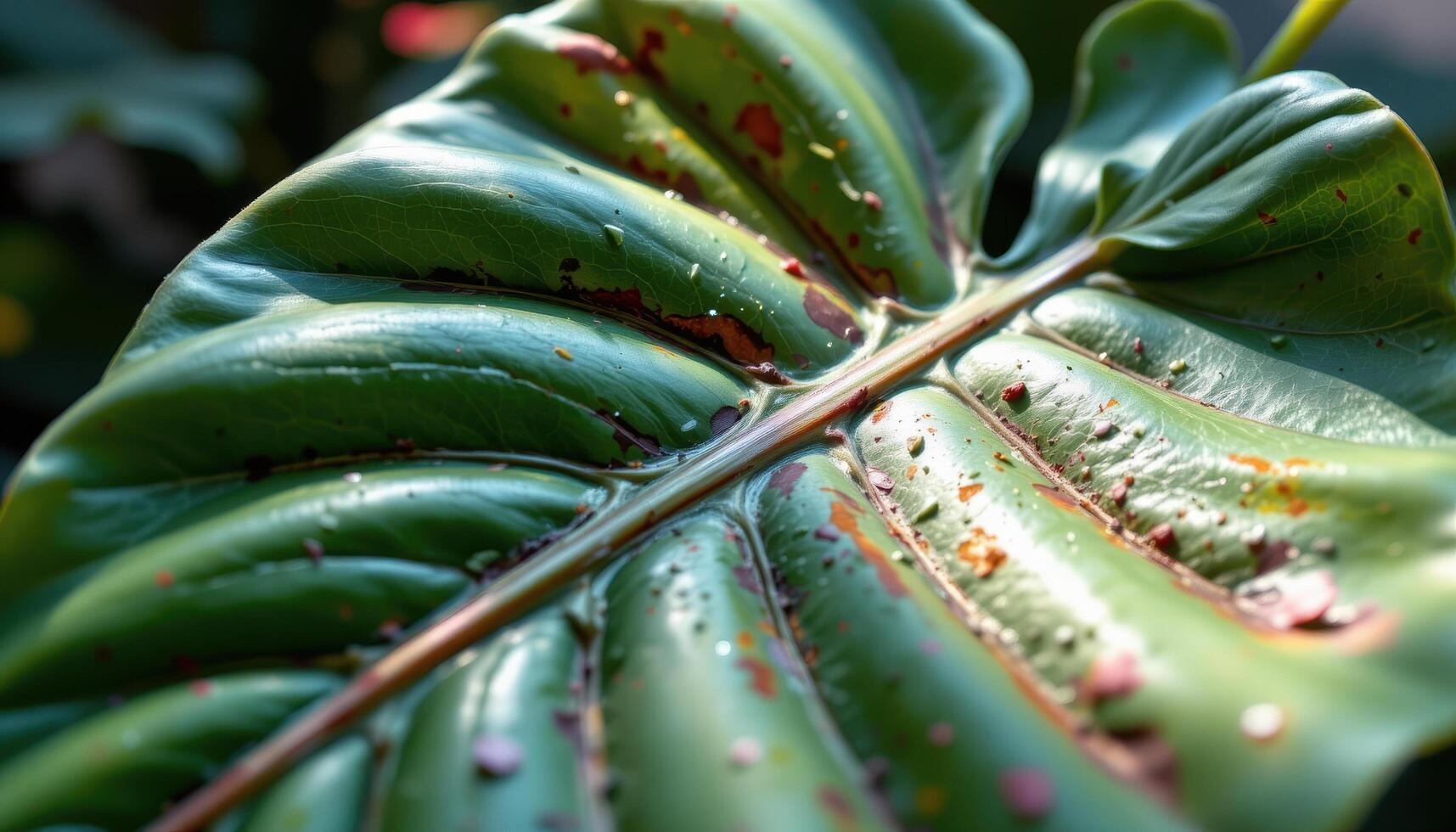 |
| A magnified view of spider mites and webbing on the underside of an alocasia leaf |
Alt text: Macro photography showing spider mite damage and fine silk webbing on a houseplant leaf
Root Rot Rescue: Surgery for Your Plant
If your plant smells like a swamp and the stems are turning black at the base, you are dealing with root rot—a fungal disease caused by overwatering. But you can still save it.
Step-by-Step Root Rot Surgery:
1. Remove the plant from its pot and gently shake off all soil.
2. Inspect the roots. Healthy roots are firm and white or tan. Rotten roots are brown, mushy, and smell bad.
3. Sterilize scissors with rubbing alcohol. Cut away every rotten root.
4. Dip the remaining roots in a 3% hydrogen peroxide solution (1 part peroxide to 2 parts water) to kill fungus.
5. Repot into a clean pot with fresh, well-draining soil (add extra perlite or orchid bark).
6. Do not water for 5 to 7 days to let the roots heal.
Light and Temperature Issues: Location is Everything
You can water perfectly and fertilize like a pro, but if your plant is in the wrong light, it will never thrive.
Too Little Light:
Symptoms: Leggy growth (long stems with few leaves), small new leaves, and leaf drop.
Fix: Move within 3 feet of a south or east-facing window. Or invest in a full-spectrum LED grow light for 12 hours a day.
Too Much Direct Sun:
Symptoms: Bleached, white, or gray patches on leaves (sunburn).
Fix: Move back from the window or use a sheer curtain to filter the light.
Temperature Stress:Avoid placing plants near drafty windows in winter or directly above radiators. Ideal range: 65°F to 75°F (18°C to 24°C) during the day, no lower than 50°F (10°C) at night.
Soil and Fertilizer Fixes: Feeding Your Indoor Jungle
After six months, most potting soils become compacted and nutrient-dead. Here is how to refresh without repotting.
Signs your soil is bad: Water sits on top for 10 seconds before soaking in. White crust forms on the soil surface (salt buildup). Your plant has stopped growing entirely.
The Solution:
Aerate the soil: Use a chopstick to gently poke holes in the soil to improve airflow.
Top-dress: Scrape off the top inch of old soil and replace it with fresh compost or worm castings.
Choose the right fertilizer: Use a balanced liquid fertilizer (like fish emulsion or seaweed extract) every 3-4 weeks in spring/summer. Stop fertilizing completely in winter.
Pro Tip: For flowering houseplants (like African violets or orchids), switch to a high-phosphorus fertilizer (like 5-10-5) to encourage blooms.
 |
| An infographic showing the NPK ratio on a fertilizer label and what each nutrient does for leaves, roots, and flowers |
Alt text: Educational infographic explaining nitrogen for green leaves, phosphorus for blooms, and potassium for root health in houseplants
Repotting and Potting Problems
A pot that is too big or too small can cause serious issues. Here is the common mistake: putting a tiny succulent into a giant pot. The excess soil holds too much water, leading to root rot.
When to repot: Roots are growing out of the drainage holes. Water runs straight through without absorbing. It has been over two years.
How to repot correctly:
1. Choose a pot only 1 to 2 inches larger in diameter than the current one.
2. Ensure the new pot has a drainage hole (no rocks at the bottom—that is a myth that causes rot).
3. Use fresh potting mix specific to your plant type (cactus mix for succulents, aroid mix for monsteras).
4. Water lightly and place in bright, indirect light for a week to recover.
Bloom Problems: Why Won’t My Plant Flower?
You bought a peace lily or a Christmas cactus for its stunning flowers, but all you see are green leaves. Frustrating, right? Most blooming houseplants need **two specific conditions** to flower: darkness and phosphorus.
Solutions for Encouraging Blooms:
For holiday cacti: Give them 12-14 hours of total darkness each night for 6 weeks in fall.
For peace lilies: Move them to a slightly brighter spot. They bloom when they are slightly root-bound.
For African violets:Use a violet-specific fertilizer and never get water on the leaves.
General tip: Reproduce their native dry season by reducing water slightly for 4 weeks before you want blooms.
FAQ: Your Last-Minute Houseplant Questions Answered
1. Why do my plant’s leaves have white powdery spots?
That is powdery mildew—a fungal disease. Increase airflow, lower humidity, and spray with a mix of 1 tablespoon baking soda + 1/2 teaspoon liquid soap + 1 gallon of water.
2. Can I save a plant with no leaves left?
Yes, if the roots and stem are still firm. Cut back all dead leaves, place the pot in bright indirect light, water sparingly, and wait 4-8 weeks for new growth.
3. Should I cut off damaged leaves?
Absolutely. Trim brown tips with sterilized scissors (following the natural leaf shape). Remove completely yellow leaves to prevent disease spread.
4. Is coffee ground good for houseplants?
Only for acid-loving plants like ferns and philodendrons, and only in small amounts. Too many coffee grounds can cause mold and nitrogen burn.
5. How do I clean plant leaves properly?
Mix 1 cup of water with 2 drops of mild dish soap. Wipe each leaf gently with a soft cloth. Never use oil or milk—they clog leaf pores (stomata).
6. Why are my new leaves smaller than old leaves?
This usually means insufficient light. The plant is stretching and reducing leaf size to conserve energy. Move it closer to a window or add a grow light.
7. My plant is leaning sideways—what do I do?
Rotate your pot by 90 degrees every time you water. Plants naturally grow toward light. If it is already leaning, stake it gently and rotate regularly.
Final Thoughts: Your Green Thumb is Closer Than You Think
Here is the secret that veteran plant parents know: every healthy plant you see has been through a rough patch. Those yellow leaves? They are lessons. That pest infestation? A battle story. The most important tool you own is not a watering can or pruning shears—it is observation.
Spend five minutes each morning looking at your plants. Touch the soil. Check under the leaves. When you catch a common houseplant problem early, the solution is almost always simple. Adjust your watering rhythm, move the pot six inches closer to a window, or wipe away a few mealybugs.
Your indoor jungle is counting on you, but you have got this. Start with the easiest fix first (usually light or water), be patient, and give your plants time to respond. Before you know it, you will be the friend everyone asks for plant advice.

No comments:
Post a Comment