

Animal World > Wild Birds
10 Most Beautiful Wild Birds in the World: A Guide to Nature’s Living Jewels
By SALAUDDIN KAWSAR ǀ Published on 03/03/2026
Introduction
There is a profound, almost spiritual magic in witnessing a flash of iridescent emerald or a streak of sunset orange darting through a forest canopy. For nature lovers and home gardeners, wild birds are more than just animals; they are the "winged jewels" of our planet. Whether you are a seasoned ornithologist or a beginner clutching your first pair of binoculars, the quest to see the most beautiful wild birds in the world is a journey that connects us to the raw, unfiltered artistry of evolution.
In this comprehensive guide, we go beyond simple aesthetics. We delve into the lives of amazing bird species that defy imagination with their plumage, courtship dances, and survival instincts. From the mist-covered cloud forests of South America to the serene ponds of East Asia, these colorful wild birds represent the pinnacle of avian splendor. Our mission today is to provide you with an immersive experience that combines stunning bird photos (mental and digital) with high-value scientific insights, ensuring your next birding adventure is as educational as it is breathtaking.
Bird Profiles: Quick Facts & Biology
Before we dive into our curated list, it is essential to understand the biological foundations of these creatures. While beauty is subjective, the biological traits that define these species are concrete.
Common Names: Resplendent Quetzal, Lilac-breasted Roller, Mandarin Duck, Golden Pheasant, etc.
Genetic Lineage: Most ornamental birds belong to the orders Passeriformes (perching birds) or Galliformes (heavy-bodied ground feeders).
Lifestyle: Predominantly diurnal (active during the day) to showcase their visual signals for mating.
Lifespan: Varies significantly; small songbirds may live 2–5 years, while larger tropical species can reach 15–20 years in the wild.
Common Food: A diverse diet ranging from protein-rich insects and small amphibians to nectar, seeds, and wild fruits.
Living Area: Habitats span from tropical rainforests and alpine meadows to suburban gardens.
In This Article
- The Resplendent Quetzal: Sacred Bird of the Maya
- The Mandarin Duck: An Explosion of Color
- The Lilac-Breasted Roller: Africa’s Rainbow Flyer
- The Golden Pheasant: Royalty of the Forest Floor
- The Wilson’s Bird of Paradise: Nature’s Geometric Wonder
- The Atlantic Puffin: The Clown of the Sea
- The Scarlet Macaw: Iconic Beauty of the Tropics
- The Flamingo: The Elegant Wader
- The Gouldian Finch: The Painted Finch
- The Kea: The Intelligent Mountain Parrot
The Resplendent Quetzal: Sacred Bird of the Maya
 |
| Resplendent Quetzal perched on a mossy branch, primary keyword-focused |
The Resplendent Quetzal is often cited by experts as the strongest contender for the title of the most beautiful bird on Earth. Found primarily in the cloud forests of Central America, from Southern Mexico to Panama, this bird was considered sacred by the Ancient Maya and Aztecs. Its name is derived from the Nahuatl word "quetzalli," which means precious or beautiful. What sets this bird apart is the stunning iridescent green plumage that shifts to cobalt blue depending on the light. The male boasts magnificent twin tail feathers that can grow up to three feet long, trailing behind him like a silken ribbon during flight. These feathers were so highly prized that they were used in royal headdresses, though the birds themselves were never killed; they were captured, plucked, and released. In terms of lifestyle, the Quetzal is a specialized fruit eater, favoring the wild avocado. Their role in the ecosystem is vital as they help disperse seeds across the forest floor. Observing a Quetzal requires patience and a visit to high-altitude regions like the Monteverde Cloud Forest in Costa Rica. The best time to spot them is during the breeding season from March to July, when the males are most active and their plumage is at its peak vibrancy.
The Mandarin Duck: An Explosion of Color
%3Amax_bytes(150000)%3Astrip_icc()/mandarin.primary-0122dea9f4144c3eb3ea5a30920cf5bd.jpg) |
| Male Mandarin Duck swimming in a serene pond, rare exotic birds |
Native to East Asia but now found in various botanical gardens and parks worldwide, the Mandarin Duck looks as though it were painted by an artist with an unlimited palette. While many waterfowl are drab, the male Mandarin is a masterclass in complexity. He features a red bill, large white crescent above the eye, and reddish face with "whiskers." The most striking feature, however, is the pair of orange "sails" that rise from its back. These birds are deeply symbolic in Chinese and Korean culture, representing wedding bliss and fidelity. Unlike many other ducks, Mandarin Ducks often perch in trees, and the females lead their ducklings on a harrowing leap from tree cavities to the ground shortly after hatching. For home gardeners with large ponds, these birds are a dream to observe, though they require specific aquatic plants and protection from predators. Their diet consists of seeds, acorns, and small fish. Because they are relatively comfortable around humans in park settings, they provide some of the best beautiful birds photos for amateur photographers.
The Lilac-Breasted Roller: Africa’s Rainbow Flyer
 |
| Lilac-breasted Roller in flight, showing wingspread, amazing birds species |
If you ever find yourself on a safari in Sub-Saharan Africa, the Lilac-breasted Roller will likely be the first bird to steal your heart. It is nearly impossible to miss. This bird possesses a staggering eight distinct colors: lilac, blue, turquoise, green, white, black, tan, and reddish-brown. It is the unofficial national bird of Kenya and Botswana for a good reason. The "Roller" name comes from its spectacular courtship flight, involving dives, loops, and twists accompanied by loud vocalizations. Unlike many other colorful birds that hide in deep foliage, the Lilac-breasted Roller prefers open woodland and savanna. They are often seen perched atop the highest branches of acacia trees, scouting for prey. They are opportunistic hunters, feeding on insects, scorpions, and even small snails. Interestingly, they are known to stay near the edges of bushfires to catch insects fleeing the flames. Their fearlessness and vibrant colors make them a favorite subject for wildlife documentaries.
The Golden Pheasant: Royalty of the Forest Floor
 |
| Golden Pheasant walking through underbrush, stunning birds in nature |
The Golden Pheasant, or Chinese Pheasant, is a ground-dwelling bird that looks like a creature out of a legend. Native to the mountainous forests of Western China, the male is adorned with a golden-yellow crest, a bright red body, and an orange "cape" that can be flared during courtship displays. Despite their flashy appearance, they are surprisingly difficult to see in the wild. They inhabit dense, dark conifer forests and spend most of their time on the ground, only flying in short bursts when startled. In captivity, however, they are quite common and have been introduced to various parts of the UK and Americas. One of the most fascinating aspects of the Golden Pheasant is its complex social hierarchy and elaborate mating ritual. The male will spread his neck feathers over his face, looking like a colorful fan, while emitting high-pitched metallic sounds. For bird watchers, finding a wild Golden Pheasant is a "holy grail" experience that requires deep forest trekking.
The Wilson’s Bird of Paradise: Nature’s Geometric Wonder
 |
| Wilson's Bird of Paradise displaying its turquoise crown |
Deep in the rainforests of Indonesia, specifically on the islands of Waigeo and Batanta, lives a bird so strange that early explorers thought it was a myth. The Wilson's Bird of Paradise is a small bird with a unique feature: a bald, turquoise-blue patch of skin on its head, crisscrossed by black feather patterns that look like ancient runes. The male’s back is crimson, and its breast is a deep, velvety green. But the real showstopper is the pair of "wire" tail feathers that curl into perfect spirals. To attract a mate, the male meticulously clears a "courtroom" on the forest floor, removing every leaf and twig so his colors pop against the dark earth. From a conservation standpoint, these are rare exotic birds that face threats from habitat loss. They are a testament to the power of sexual selection, where the female's preference for specific patterns has driven the male's evolution into a living piece of geometric art.
The Atlantic Puffin: The Clown of the Sea
 |
| Atlantic Puffin with a beak full of sand eels, beautiful birds photos |
The Atlantic Puffin is the charismatic "sea parrot" of the Northern Atlantic. While it may not have the iridescent sheen of a tropical bird, its structural beauty and tuxedo-like plumage are iconic. Their most famous feature is the large, brightly colored beak that turns vibrant orange and red during the spring breeding season. Puffins spend the majority of their lives at sea, resting on the waves when they aren't swimming. They are incredible divers, reaching depths of up to 60 meters to catch small fish like sand eels. When they return to land, they form massive colonies on clifftops, nesting in underground burrows. For bird watchers in North America and Europe, visiting a Puffin colony in Maine, Iceland, or Scotland is a top-tier bucket list item. They are incredibly photogenic and have a curious, almost comical expression that endears them to everyone who sees them.
The Scarlet Macaw: Iconic Beauty of the Tropics
 |
| Pair of Scarlet Macaws flying over a rainforest canopy |
No list of beautiful wild birds is complete without the Scarlet Macaw. These large, intelligent parrots are the quintessential symbol of the Neotropics. With their brilliant red, yellow, and blue plumage, they are impossible to ignore. Scarlet Macaws are highly social and are often seen flying in pairs or small family groups, communicating with loud, raucous screams that can be heard for miles. They are monogamous, mating for life and sharing the responsibility of raising their young. This social bond is a key part of their survival strategy. They possess incredibly strong beaks, capable of cracking the hardest nuts and seeds found in the rainforest. In some regions, they gather at "clay licks" to consume minerals that neutralize toxins in their diet. Watching a dozen Scarlet Macaws take flight against a green canopy is one of the most stunning sights in nature.
The Flamingo: The Elegant Wader
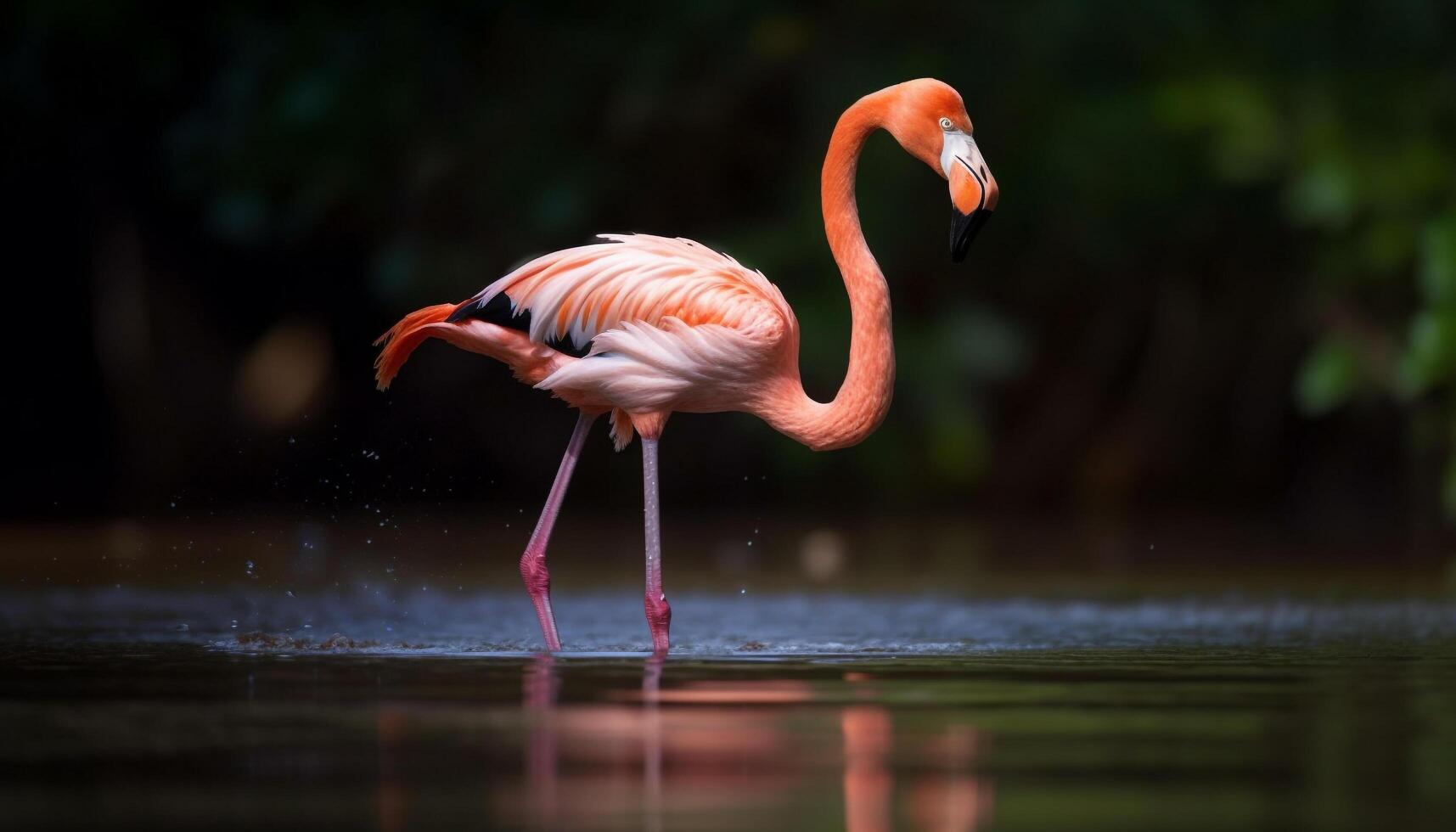 |
| Flock of Pink Flamingos standing in a salt lake |
The Flamingo is a marvel of biology and grace. Their pink color isn't actually genetic; it comes from the carotenoid pigments in the algae and brine shrimp they eat. A "pale" flamingo is often a sign of a poor diet or ill health. There are six species of flamingos, with the Greater Flamingo being the largest and most widespread. They are famous for their "one-legged" stance, which scientists believe is a way to conserve body heat and reduce muscle fatigue. Their downward-curving beaks are specialized filter-feeding tools, allowing them to separate food from silt and mud. These birds are highly gregarious, living in colonies that can number in the tens of thousands. The sight of a "flamboyance" of flamingos performing a synchronized marching dance is a highlight for any nature lover visiting the alkaline lakes of Africa or the Caribbean.
The Gouldian Finch: The Painted Finch
 |
| Male Gouldian Finch with multi-colored plumage |
Hailing from the grasslands of Northern Australia, the Gouldian Finch is a tiny bird that packs a massive visual punch. Also known as the Rainbow Finch, it features a bright green back, a yellow belly, and a purple breast. Their heads can be red, black, or yellow, leading to incredible genetic diversity within the same species. In the wild, these birds are unfortunately endangered due to habitat changes and fires. However, they are popular in the aviary trade, which has helped preserve their numbers. They are social birds that prefer to live in flocks, especially near water sources. For the home gardener in Australia, providing a bird-friendly habitat with native grasses can sometimes attract these rare beauties. They are a reminder that some of the most amazing bird species are often the smallest.
The Kea: The Intelligent Mountain Parrot
 |
| Kea parrot on a snowy mountain peak |
The Kea of New Zealand makes our list not just for its subtle olive-green beauty and bright orange under-wings, but for its incredible personality. Known as the "Clown of the Mountains," the Kea is the world's only alpine parrot.
They are famously intelligent—perhaps the most intelligent of all birds. They are known to solve puzzles, use tools, and even play pranks on tourists by stealing windshield wipers or opening backpacks. Their curiosity is boundless, which has led to a complicated relationship with humans.
While they may not have the "rainbow" look of a Macaw, their rugged beauty and the flash of orange when they fly are mesmerizing. They represent the wild, untamable spirit of the New Zealand Alps.
Don't Miss This: Expert Tips for Bird Watching
To truly appreciate these most beautiful wild birds in the world, you need more than just luck. Here is some insider advice:
Invest in "ED" Glass: When buying binoculars, look for Extra-low Dispersion (ED) glass. It minimizes color fringing, allowing you to see the true vibrancy of a bird's feathers.
The "Golden Hour" Rule: Almost all birds are most active and look best in the first hour after sunrise and the last hour before sunset. The soft light enhances their iridescent colors.
Common Mistake: Don't wear bright colors. Many birds have excellent color vision and will see you coming from a mile away. Stick to earth tones like olive, tan, or grey.
Insider Advice: Use "Bird Palling" or "Pishing." Making a soft "pssh-pssh-pssh" sound can often draw small, curious songbirds out of thick foliage so you can get a better look.
FAQ: Frequently Asked Questions
Q: Which bird is considered the rarest on this list?
A: The Wilson's Bird of Paradise and the Gouldian Finch (in the wild) are among the rarest and most localized species mentioned.
Q: Can I attract any of these birds to my backyard?
A: Depending on your location, you can attract species like the Mandarin Duck (if you have a pond) or various colorful finches and parrots by planting native flora.
Q: Why are male birds usually more beautiful than females?
A: This is due to sexual selection. Males use bright colors and displays to prove their health and genetic fitness to females, who are often drab to remain camouflaged while nesting.
Q: What is the best camera for bird photography?
A: A camera with a fast autofocus system and a lens with at least 400mm to 600mm focal length is ideal for capturing stunning birds in nature.
Q: Are these birds protected by law?
A: Yes, most of these species are protected under international treaties like CITES and local national park laws to prevent poaching and habitat destruction.
Q: Where is the best place in the world for bird watching?
A: Costa Rica, Colombia, and Northern Australia are often cited as the top destinations for seeing a high density of colorful wild birds.
Q: Do birds' colors fade over time?
A: In the wild, birds molt their feathers once or twice a year to replace damaged or faded plumage, ensuring they always look their best for mating season.
Pros & Cons of Bird Watching as a Hobby
| Pros | Cons |
| Promotes mindfulness and reduces stress. | Can be an expensive hobby (gear and travel). |
| Encourages outdoor physical activity. | Requires immense patience and early mornings. |
| Contributes to citizen science (via apps like eBird). | Dependent on weather and seasonal migrations. |
| Suitable for all age groups and skill levels. | Some rare species are in difficult-to-reach terrain. |
Conclusion
The world is a far more vibrant place because of these most beautiful wild birds. They serve as biological indicators of our planet's health and as reminders of the sheer creativity of nature. Whether it is the regal tail of the Quetzal or the playful intelligence of the Kea, each species offers a unique story of survival and splendor.
As you step outside with your binoculars or scroll through beautiful birds photos, remember that these creatures rely on us to protect their habitats. By supporting conservation efforts and practicing ethical bird watching, we ensure that future generations can also experience the wonder of these living masterpieces.
What is the most beautiful bird you have ever seen in the wild? Share your stories in the comments below, and don't forget to subscribe to our newsletter for more nature guides!
Internal & External Linking Suggestions
Internal Links:
How to Create a Bird-Friendly Garden for Beginners
The Ultimate Guide to Choosing Your First Pair of Binoculars
Top 5 Tropical Destinations for Wildlife Photography
Understanding Bird Migration: Why They Travel Thousands of Miles
Eco-Friendly Gardening: Protecting Local Biodiversity
External Links:
The Cornell Lab of Ornithology (High-authority research and bird ID)
National Audubon Society (Bird conservation and policy)
BirdLife International (Global database of endangered species)
National Geographic Wildlife (High-quality photography and documentaries)
Smithsonian Insider (Scientific insights into avian evolution)

No comments:
Post a Comment